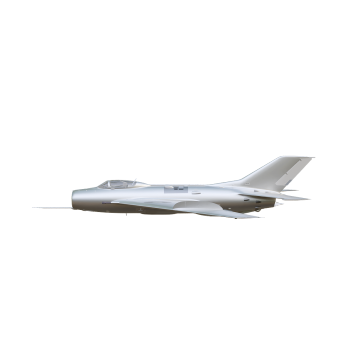
Soviet MiG-19S "Fagot" jet fighter

Soviet MiG-19S "Fagot" jet fighter

It is a single-seat twin-engine jet fighter developed by the Mikoyan-Gleevich Design Bureau of the Soviet Union in the 1950 s. It is the first supersonic fighter in mass production in the Soviet Union. It is an improved model in the MiG-19 series, known for its excellent climb rate and high-speed performance. It was difficult to maneuver while flying at supersonic speeds, but excelled in the rate of climb. During the Cold War, he was one of the main fighters of the Soviet Union and its allies and participated in many conflicts and wars. The design and performance were advanced at the time, but with the emergence of a new generation of jet fighters, they fell behind in technology. It still occupies an important position in the history of flight and is a milestone.
Soviet MiG-15 "Fagot" high subsonic jet fighter (silver gray)

Soviet MiG-15 "Fagot" high subsonic jet fighter (silver gray)

It is a high subsonic jet fighter developed by the Soviet Union in the early days of the Cold War, designed by Artyom Mikoyan and Mikhail Greevich. It was the first swept-wing jet in the Soviet Union, and its design was influenced by the German Ta183 jet. It made its first test flight on December 30, 1947, and proved its strength in the Korean War, launching a fierce aerial confrontation with the American F-86 Sabre. Known for its excellent flight performance and powerful weapon systems, it is equipped with a Klimov RD-45 jet engine.
Soviet MiG-15 "Fagot" High Subsonic Jet Fighter (Silver White)

Soviet MiG-15 "Fagot" High Subsonic Jet Fighter (Silver White)

It is a high subsonic jet fighter developed by the Soviet Union in the early days of the Cold War, designed by Artyom Mikoyan and Mikhail Greevich. It was the first swept-wing jet in the Soviet Union, and its design was influenced by the German Ta183 jet. It made its first test flight on December 30, 1947, and proved its strength in the Korean War, launching a fierce aerial confrontation with the American F-86 Sabre. Known for its excellent flight performance and powerful weapon systems, it is equipped with a Klimov RD-45 jet engine.
Soviet MiG-15 "Fagot" high subsonic jet fighter (fan color)

Soviet MiG-15 "Fagot" high subsonic jet fighter (fan color)

It is a high subsonic jet fighter developed by the Soviet Union in the early days of the Cold War, designed by Artyom Mikoyan and Mikhail Greevich. It was the first swept-wing jet in the Soviet Union, and its design was influenced by the German Ta183 jet. It made its first test flight on December 30, 1947, and proved its strength in the Korean War, launching a fierce aerial confrontation with the American F-86 Sabre. Known for its excellent flight performance and powerful weapon systems, it is equipped with a Klimov RD-45 jet engine.
Russian MiG-31 "Foxhound" Intercept Fighter (Black)

Russian MiG-31 "Foxhound" Intercept Fighter (Black)

It is a Soviet/Russian tandem two-seater all-weather interception fighter designed by Mikoyan and Gleevich Design Bureau. It was developed to replace the MiG-25 "Foxbat" and was designed to intercept high-speed, high-altitude targets. It first flew in 1975 and entered service in 1983. It has an upper single wing, double vertical tail and air intake layout on both sides, with a captain of 22.69 meters, a wingspan of 13.46 meters and a height of 6.15 meters. It is equipped with two D-306 afterburner turbofan engines. Known for its high speed, long range, large bomb load and strong interception capability, it is still one of the main fighters of the Russian Air Force.
Russian MiG-31 "Foxhound" Intercept Fighter (Blue)

Russian MiG-31 "Foxhound" Intercept Fighter (Blue)

It is a Soviet/Russian tandem two-seater all-weather interception fighter designed by the Mikoyan and Greevich Design Bureau. It was developed to replace the MiG-25 "Foxbat" and was designed to intercept high-speed, high-altitude targets. It first flew in 1975 and entered service in 1983. It has an upper single wing, double vertical tail and air intake layout on both sides, with a captain of 22.69 meters, a wingspan of 13.46 meters and a height of 6.15 meters. It is equipped with two D-306 afterburner turbofan engines. Known for its high speed, long range, large bomb load and strong interception capability, it is still one of the main fighters of the Russian Air Force.
Russian MiG-31 "Foxhound" Intercept Fighter (Army Green)

Russian MiG-31 "Foxhound" Intercept Fighter (Army Green)

It is a Soviet/Russian tandem two-seater all-weather interception fighter designed by Mikoyan and Gleevich Design Bureau. It was developed to replace the MiG-25 "Foxbat" and was designed to intercept high-speed, high-altitude targets. It first flew in 1975 and entered service in 1983. It has an upper single wing, double vertical tail and air intake layout on both sides, with a captain of 22.69 meters, a wingspan of 13.46 meters and a height of 6.15 meters. It is equipped with two D-306 afterburner turbofan engines. Known for its high speed, long range, large bomb load and strong interception capability, it is still one of the main fighters of the Russian Air Force.
Soviet MiG-29 "Fulcrum" fighter

Soviet MiG-29 "Fulcrum" fighter

It is a fourth-generation jet fighter developed by the Soviet Miaoyan Design Bureau in the 1970 s and was designed to replace earlier models such as the MiG-21 and MiG-23. Known for its excellent maneuverability and high-speed performance, it is the main aircraft of the Soviet Air Force and the air forces of many other countries. The design focuses on air superiority and multi-purpose capabilities, capable of performing tasks in day, night and complex weather conditions. The aerodynamic design includes a wing-to-body fusion body, a large wing and a double vertical tail, which provide excellent lift and maneuverability. The power system is provided by two Klimov RD-33 afterburner turbofan engines.
Soviet MiG-21 "Fishbed" fighter

Soviet MiG-21 "Fishbed" fighter

A supersonic jet fighter designed by the Soviet Miaoyan Design Bureau in the mid-1950s. It is a single-seat, single-launch light fighter, known for its high-speed performance and excellent climb rate. It was originally designed for high-altitude, high-speed interception and against enemy bombers and high-speed targets. A delta wing design with a large sweep angle was adopted, which made it possible to reach a maximum flight speed of Mach 2.2. The fuselage structure is mainly composed of alloy steel and titanium alloy, which provides good protection. Despite earning the nickname "Air Coffin" in some accidents, it has proved its combat worth in many conflicts throughout history
Russian MiG-31 "Foxhound" Intercept Fighter

Russian MiG-31 "Foxhound" Intercept Fighter

It is a Soviet/Russian tandem two-seater all-weather interception fighter designed by Mikoyan and Gleevich Design Bureau. It was developed to replace the MiG-25 "Foxbat" and was designed to intercept high-speed, high-altitude targets. It first flew in 1975 and entered service in 1983. It has an upper single wing, double vertical tail and air intake layout on both sides, with a captain of 22.69 meters, a wingspan of 13.46 meters and a height of 6.15 meters. It is equipped with two D-306 afterburner turbofan engines. Known for its high speed, long range, large bomb load and strong interception capability, it is still one of the main fighters of the Russian Air Force.
Soviet Su-25 "Frogfoot" sonic attack aircraft (dry grass color camouflage)

Soviet Su-25 "Frogfoot" sonic attack aircraft (dry grass color camouflage)

It is a single-seat two-engine subsonic attack aircraft developed by the Soviet Union's Sukhoi Design Bureau and is mainly used for close air support. The nickname given by NATO is "frog foot". It has good subsonic performance and low-altitude maneuverability. The fuselage is short and thick. The bottom of the fully welded cockpit is equipped with 24mm titanium alloy bulletproof steel plates. It has strong survivability and can resist general ground artillery attacks. It can take off from airstrips, cooperate with Mi-24 armed helicopters, and cooperate with ground forces to attack tanks, armored vehicles and important fire points. The main feature is the ability to take off and land on airstrips close to the front line and perform close combat support missions.
Soviet Su-25 "Frogfoot" sonic attack aircraft (blue)

Soviet Su-25 "Frogfoot" sonic attack aircraft (blue)

It is a single-seat two-engine subsonic attack aircraft developed by the Soviet Union's Sukhoi Design Bureau and is mainly used for close air support. The nickname given by NATO is "frog foot". It has good subsonic performance and low-altitude maneuverability. The fuselage is short and thick. The bottom of the fully welded cockpit is equipped with 24mm titanium alloy bulletproof steel plates. It has strong survivability and can resist general ground artillery attacks. It can take off from airstrips, cooperate with Mi-24 armed helicopters, and cooperate with ground forces to attack tanks, armored vehicles and important fire points. The main feature is the ability to take off and land on airstrips close to the front line and perform close combat support missions.
Soviet Tu-22M3 "Backfire" bomber (black)
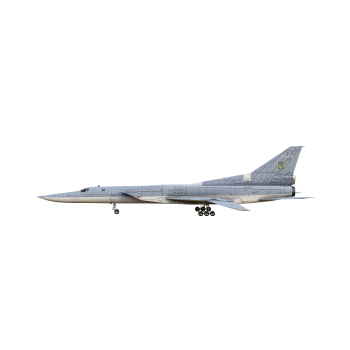
Soviet Tu-22M3 "Backfire" bomber (black)

It is a supersonic, variable swept wing, long-range strategic and sea strike bomber developed by the Soviet Tupolev Design Bureau in the 1960 s. It is one of the main aircraft of the Soviet Air Force and the Soviet Naval Air Force, and is still in service in the Russian Air Force and Naval Air Force. The aerodynamic layout design with double engine, single vertical tail and lower single wing uses variable swept wing, which can take into account the needs of low-speed take-off and landing and high-speed penetration. The fuselage can carry 6 and 4 ground and sea missiles, regular and nuclear bombs, air-to-ship missiles, anti-cruise missiles, nearly 24 tons of bombs and aviation mines.
Soviet Tu-22M3 Backfire Bomber (blue)

Soviet Tu-22M3 Backfire Bomber (blue)

It is a supersonic, variable swept wing, long-range strategic and sea strike bomber developed by the Soviet Tupolev Design Bureau in the 1960 s. It is one of the main aircraft of the Soviet Air Force and the Soviet Naval Air Force, and is still in service in the Russian Air Force and Naval Air Force. The aerodynamic layout design with double engine, single vertical tail and lower single wing uses variable swept wing, which can take into account the needs of low-speed take-off and landing and high-speed penetration. The fuselage can carry 6 and 4 ground and sea missiles, regular and nuclear bombs, air-to-ship missiles, anti-cruise missiles, nearly 24 tons of bombs and aviation mines.
Soviet Su-27 "Flanker" heavy fighter (green camouflage)

Soviet Su-27 "Flanker" heavy fighter (green camouflage)

It is a single-seat dual-engine all-weather air superiority heavy fighter developed by the Soviet Union's Sukhoi Design Bureau. It belongs to the third-generation fighter. The design began in 1969 and was developed to counter the American F-15 "Eagle" fighter. It is known for its excellent mobility, high-speed performance and long-range combat capability. Using the wing-body fusion technology, the cantilever type has a single wing, a smooth curved forward wing and a double vertical tail normal layout. The fuselage is made of a large number of titanium alloys, with a four-degree fly-by-wire control system, no mechanical backup, and a static and unstable design. It is still an important asset of the air forces of Russia and many other countries.
Soviet Su-27 "Flanker" heavy fighter (blue camouflage)

Soviet Su-27 "Flanker" heavy fighter (blue camouflage)

It is a single-seat dual-engine all-weather air superiority heavy fighter developed by the Soviet Union's Sukhoi Design Bureau. It belongs to the third-generation fighter. The design began in 1969 and was developed to counter the American F-15 "Eagle" fighter. It is known for its excellent mobility, high-speed performance and long-range combat capability. Using the wing-body fusion technology, the cantilever type has a single wing, a smooth curved forward wing and a double vertical tail normal layout. The fuselage is made of a large number of titanium alloys, with a four-degree fly-by-wire control system, no mechanical backup, and a static and unstable design. It is still an important asset of the air forces of Russia and many other countries.
Russia Su-30SM multi-function fighter

Russia Su-30SM multi-function fighter

It is a multi-functional fighter developed by the Russian Sukhoi Design Bureau based on Su-30MKI, specially designed for the Russian Air Force. This two-seat, two-engine fighter is known for its excellent maneuverability and advanced avionics equipment, and can perform a variety of tasks such as air superiority, ground attack and electronic warfare. The fuselage is made of titanium alloy and high-strength aluminum alloy, which has high maneuverability and is realized by thrust vector control. Equipped with N011M passive phased array radar, the maximum detection range of up to 400km, can track multiple targets at the same time. The weapon side is capable of carrying a weapon payload of up to 8 tons.
Russia Su-35 multi-role heavy fighter

Russia Su-35 multi-role heavy fighter

Also known as "Flanker-E" or "SuperFlanker", it is a single-seat dual-engine multi-purpose heavy fighter that has been deeply improved by the Russian Sukhoi Design Bureau on the basis of Su-27. It belongs to the fourth-generation and a half-fighter. It is known for its excellent maneuverability and advanced avionics, with long-range, multi-purpose, air optimization and strike characteristics. Two 117 engines provide vectoring thrust and are highly maneuverable, capable of launching guided missiles, unguided bombs and other weapons systems, while striking multiple aerial targets. The maximum carrying capacity of 8 tons, can carry all kinds of Russian precision guided weapons.
Russian Su-30MK multi-role fighter

Russian Su-30MK multi-role fighter

Also known as the Flanker-H is a two-seater, two-launch multi-role fighter developed by the Russian Sukhoi Design Bureau and is part of the Su-27 fighter family. It is designed to meet a variety of combat missions, including air superiority, ground attack, electronic warfare and maritime strikes. Features include its advanced avionics, strong weapon payload capabilities, and superior maneuverability. Two AL-31F turbofan engines are equipped with thrust vectoring capability, which allows the Su-30 MK to perform complex maneuvers. Maximum speed up to Mach 1.9 with a service ceiling of 17,300 meters
Russian Su-34 "Fullback" fighter/bomber (black)

Russian Su-34 "Fullback" fighter/bomber (black)

It is a twin-engine, two-seat, all-weather supersonic medium fighter/bomber developed by the Russian Sukhoi Design Bureau. is a derivative of the Su-27 "Flanker", originally known as Su-27IB, intended to replace the Su-24 "Fencer". The design retains the basic layout of the Su-27, including the fuselage structure, engines, wings, empennage and most of the on-board equipment, while using Su-30 canards to improve maneuverability. Characterized by its side-by-side two-seater cockpit and "platypus"-shaped nose, this design provides better ergonomics and collaborative efficiency.
Russian Su-34 "Fullback" fighter/bomber (blue camouflage)

Russian Su-34 "Fullback" fighter/bomber (blue camouflage)

It is a twin-engine, two-seat, all-weather supersonic medium fighter/bomber developed by the Russian Sukhoi Design Bureau. is a derivative of the Su-27 "Flanker", originally known as Su-27IB, intended to replace the Su-24 "Fencer". The design retains the basic layout of the Su-27, including the fuselage structure, engines, wings, empennage and most of the on-board equipment, while using Su-30 canards to improve maneuverability. Characterized by its side-by-side two-seater cockpit and "platypus"-shaped nose, this design provides better ergonomics and collaborative efficiency.
Russian Su-34 "Fullback" fighter/bomber (blue camouflage)

Russian Su-34 "Fullback" fighter/bomber (blue camouflage)

It is a twin-engine, two-seat, all-weather supersonic medium fighter/bomber developed by the Russian Sukhoi Design Bureau. is a derivative of the Su-27 "Flanker", originally known as Su-27IB, intended to replace the Su-24 "Fencer". The design retains the basic layout of the Su-27, including the fuselage structure, engines, wings, empennage and most of the on-board equipment, while using Su-30 canards to improve maneuverability. Characterized by its side-by-side two-seater cockpit and "platypus"-shaped nose, this design provides better ergonomics and collaborative efficiency.
Russian MiGUTS trainer

Russian MiGUTS trainer

It is an advanced jet trainer developed by Russia's United Aircraft Corporation (UAC) to replace the old L-39 jet basic trainer. Designed as a single-engine aircraft to reduce procurement and operating costs and improve economy. It will use the same AL-222-25 turbofan engine as the Yak -130, which is already manufactured in Russia. The design draws on elements of previous MiG-AT trainers, including the cockpit design, to speed up the development process. Its development reflects Russia's modernization efforts in the field of military aviation, especially to improve the efficiency and effectiveness of pilot training.
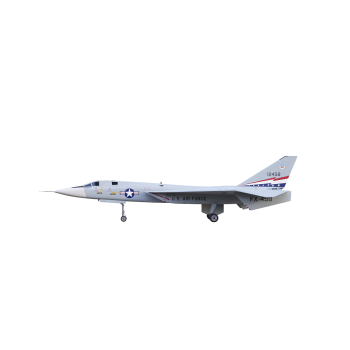
American XF-108Rapier Interceptor

American XF-108Rapier Interceptor

It was a high-altitude high-speed interceptor designed by North American Airlines in the late 1950 s to intercept Soviet long-range bombers. It is designed to fly at Mach 3 and has an operational range of 1,150 miles. It is equipped with four 20mm guns and is capable of carrying payloads of up to 4,000 pounds, including rockets and regular bombs. It is powered by two General Electric YJ93-GE-3AR turbojet engines, each with a thrust of 29,300 pounds. The size is very large compared to other aircraft of the time, with a length of 27 meters.